
Published 21 days ago
The UFC flyweight champion secured his title defense against Alexandre Pantoja despite a serious shoulder injury.
Hidden h2 tag if not homepage
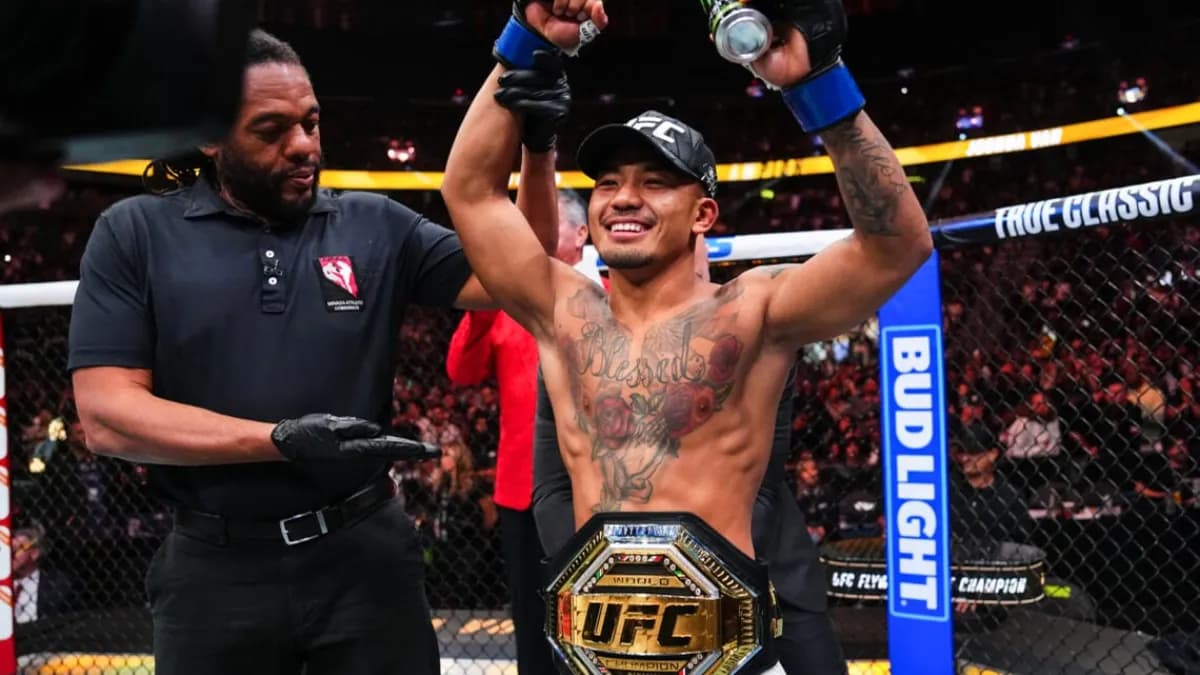
Joshua Van defended his title at UFC 331 against Alexandre Pantoja despite an acromioclavicular tear in his right shoulder. The champion dominated his opponent by unanimous decision, proving exceptional resilience. Medical exams will now determine his return timeline.
To remember:
- Joshua Van fought with an acromioclavicular tear in his right shoulder at UFC 331.
- Despite this injury, he dominated Alexandre Pantoja by unanimous decision, demonstrating remarkable resilience.
- Van had to adapt his training, focusing on intensive cardio rather than sparring.
- His medical exams will be crucial in assessing the severity of the injury and his future return.
- He recorded a 38% strike accuracy rate, a figure below his usual standards.
A historic victory despite the pain
At UFC 331, Joshua Van wrote a new chapter in history by defending his flyweight title despite an acromioclavicular tear in his right shoulder. An injury that could have forced him to withdraw, but it did not dampen his determination. Facing Alexandre Pantoja, the champion delivered a solid performance, winning by unanimous decision. A victory that resonates as a tribute to his resilience and iron will.
But this win has a special flavor. Van had to demonstrate rare adaptability. Deprived of traditional sparring due to his injury, he shifted his training toward intensive cardio sessions, a risky strategy that paid off. Proof that in the Octagon, mental and physical preparation counts as much as pure technique.
An unconventional preparation
The last two weeks before the fight were a true ordeal for Van. Unable to train normally, he had to innovate to stay competitive. His team focused on advanced cardiovascular work, partly compensating for the inability to practice striking combinations. An approach that surprised more than one observer but proved its effectiveness.
Official statistics also reveal the scale of the challenge: Van only achieved a 38% strike accuracy rate. A figure well below his usual standards, yet enough to dominate Pantoja. A performance that raises questions: how far can you push an injured athlete without compromising their physical integrity?
What’s next? Return timeline in limbo
The burning question now is: when will Joshua Van step back into the Octagon? Post-fight medical exams will be decisive. The severity of the acromioclavicular tear must be precisely assessed to avoid any risk of recurrence. Van, for his part, seems determined to return stronger, despite legitimate doubts.
One thing is certain: this victory will stand as an example of courage and perseverance. In a sport where performance often takes precedence over health, Joshua Van chose to show that resilience can also be a formidable weapon.
Joshua Van proved that in the UFC, mindset and adaptability can triumph over injuries. A lesson in resilience that will leave a lasting impression far beyond the Octagon.