
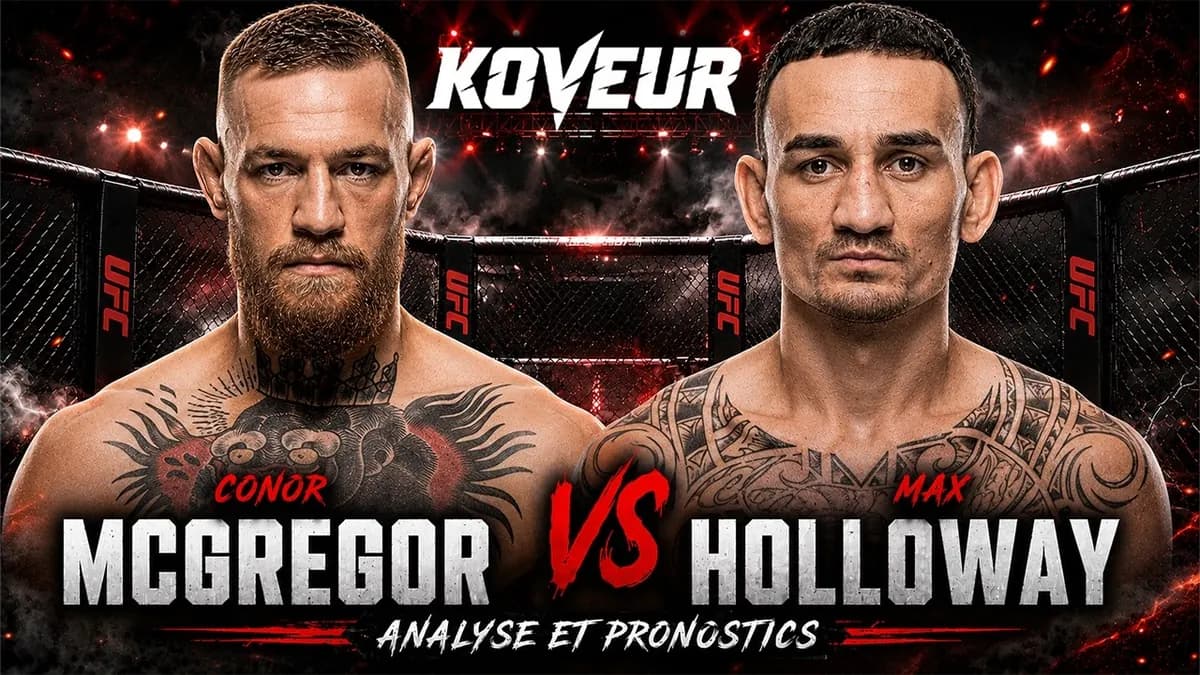
The UFC world was shaken this weekend by two fights with radically opposite outcomes. Conor McGregor, the Irish icon and former dual champion in the lightweight and featherweight divisions, had a return that was far from smooth. Within the first seconds of his bout against Max Holloway, a sudden knee injury forced him to withdraw, ending what was supposed to be a triumphant comeback prematurely.
An injury that painfully reminds us of the unpredictability of combat sports. McGregor, accustomed to the spotlight and spectacular victories, had to leave the Octagon on a stretcher, leaving fans and pundits wondering: is the "Notorious" era truly over?
Pimblett Makes History in Record Time
In stark contrast to McGregor’s setback, Paddy Pimblett shone with his deadly efficiency. Facing Benoît Saint Denis, the Brit once again proved why he is one of the UFC’s rising stars. In just 58 seconds, he controlled his opponent before submitting him, reinforcing his reputation as an explosive and technical fighter.
This record-breaking technical KO not only left a lasting impression but also solidified Pimblett’s position among the top contenders in the lightweight division. A performance reminiscent of the meteoric rises of Khabib Nurmagomedov or Georges St-Pierre, where technical dominance crushed everything in its path.
The UFC at a Crossroads
These two contrasting results raise a crucial question: who really dominates the UFC today? McGregor, once untouchable, now seems to be caught up by the physical limits of his career. Holloway, on the other hand, confirms his status as a winning machine, while Pimblett establishes himself as the new fan favorite.
One thing is certain: the UFC continues to surprise, swinging between fading legends and emerging stars. And in this endless dance, one certainty remains: the show is never over.