
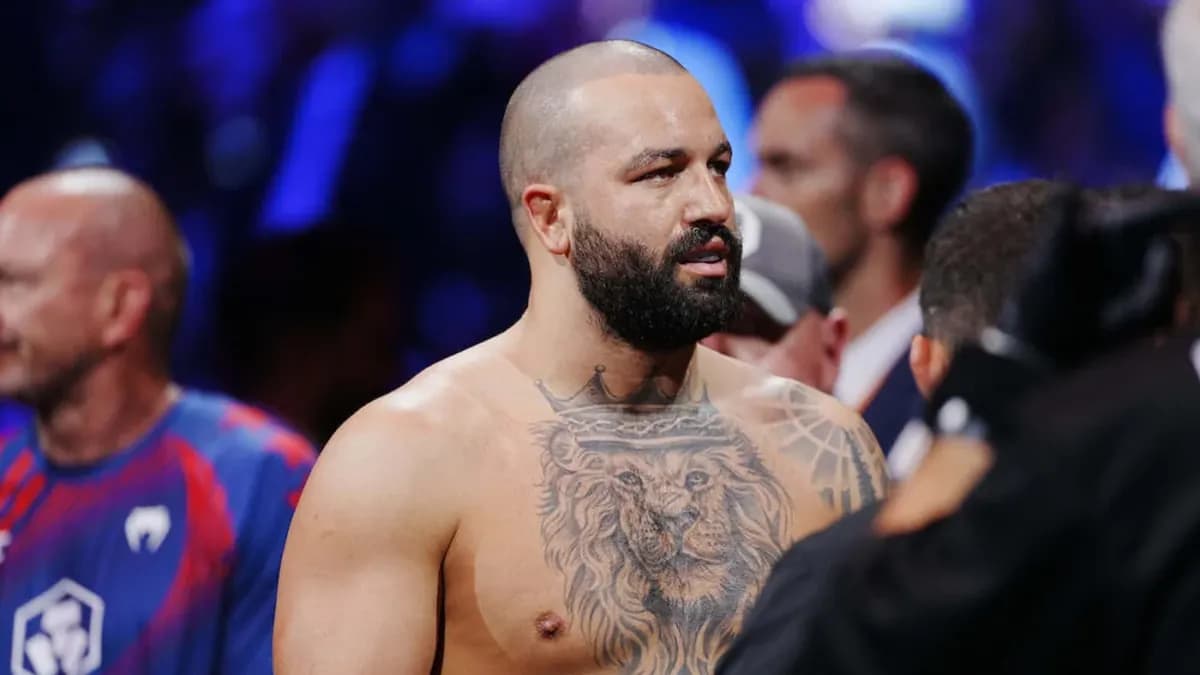
Josh Hokit, the American heavyweight with a style as flashy as it is controversial, has just landed another blow in the debate over trash talk in MMA. After UFC’s iconic announcer Bruce Buffer criticized his overly aggressive attitude, Hokit chose to respond with biting irony on X.
In a post that quickly went viral, he pointed out that his verbal provocations were nothing compared to the legal histories of some fighters in the league. "We’re in the gladiator business," he declared, implying that the UFC might need to rethink its selection criteria. A statement that, of course, did not go unnoticed.
Trash Talk: A Double-Edged Sword
With a perfect record of four wins in four fights, Hokit relies on his straight talk to stand out in an already crowded division of strong personalities. But this time, he’s taken aim at the UFC’s ethical standards. By contrasting his provocations with far more serious issues—such as sexual assault allegations or criminal convictions—he’s raised a legitimate question: where do we draw the line between free speech and responsibility?
A Debate That Goes Beyond Mere Verbal Clashes
Hokit’s retort isn’t just a jab at Buffer. It reignites a broader debate about MMA’s image and fan expectations. On one side, purists defend trash talk as a tradition of the sport, a way to create spectacle. On the other, critics see it as a slippery slope, a lack of professionalism that harms the league’s reputation.
Hokit, for his part, fully embraces his role as a provocateur. "If the UFC wants a league of gentlemen, they should say so clearly," he fired back, implying that the promotion prefers to fuel the spectacle rather than penalize reprehensible behavior. Another provocation in a sport where the boundaries are often blurred.